
QALAMOUN, SYRIA
Environmental recovery and regional development for Qalamoun.
The Qalamoun Foundation for Development and Environment works across the towns and villages of the region to advance cleaner settlements, safer water and sanitation, protected land, and practical local development.
THE REGIONAL CONTEXT
Why Qalamoun?
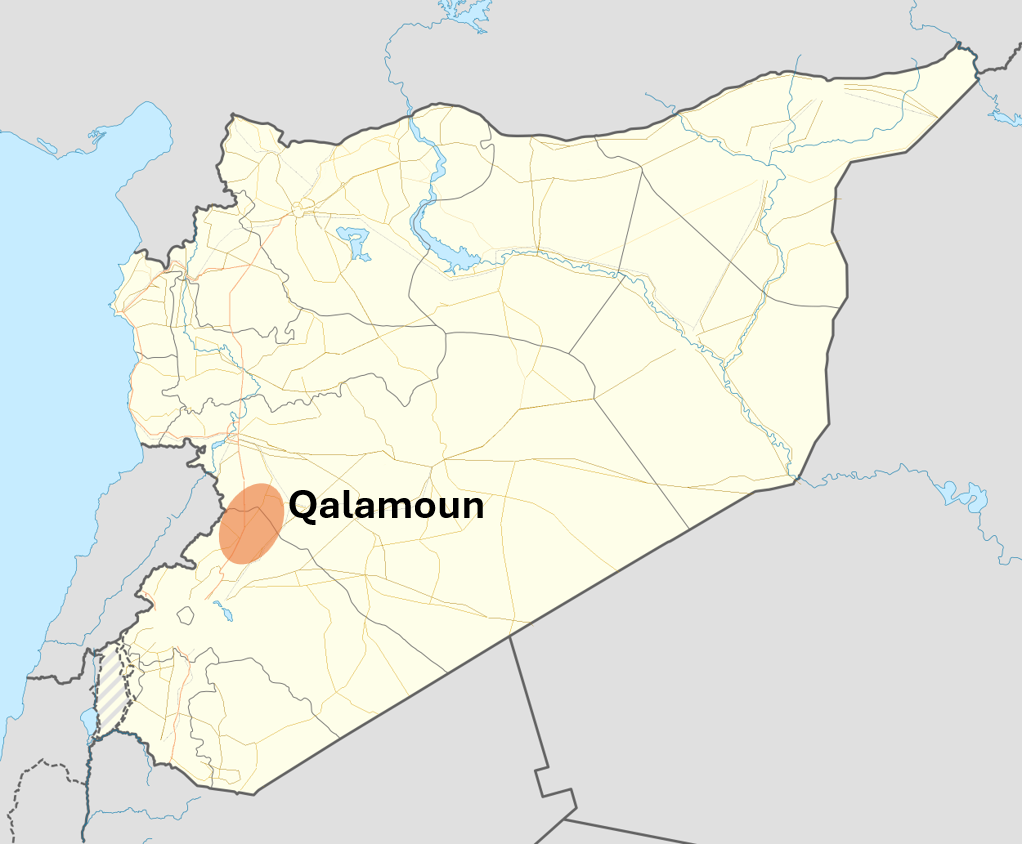
Qalamoun lies along the Damascus–Homs corridor and beside routes connecting the region with Lebanon. During the conflict, its towns experienced fighting, displacement and prolonged disruption to transport, trade and essential services.
Recovery now depends on the everyday systems that keep communities healthy and functioning: organised waste collection, safe water, sanitation, maintained municipal equipment and protection of land and groundwater.
18,000
Estimated Syrians who crossed into Lebanon through Arsal between 15 and 22 November 2013, many reporting flight from Qara, Al-Sahel, Deir Atiyeh and An-Nabk.
UNHCR, 22 November 2013
US$216bn
World Bank estimate of the cost of reconstructing Syria’s damaged physical assets, with Rif Dimashq among the most severely affected governorates.
World Bank, 21 October 2025
14.4m
People across Syria reported to require urgent water, sanitation and hygiene assistance in 2026.
UNICEF Syria, 5 February 2026
OUR WORK
Four connected priorities
Environmental recovery depends on systems that work together. The Foundation concentrates on four fields with direct consequences for health, daily life and the future of the region.
PRIORITY REGIONAL PROGRAMME
Qalamoun Regional Municipal Solid Waste Programme
The programme sets out a shared system for the towns and villages of Qalamoun: more dependable local collection, coordinated transfer and transport, recovery and treatment where practical, and safe final disposal. Its purpose is to reduce uncontrolled dumping and open burning while improving public health, environmental protection and the reliability of municipal services.
OUR APPROACH
Regional where necessary. Local where it matters.
Some services must remain close to each town. Others become more practical when neighbouring communities share infrastructure, technical preparation and operating capacity.
01
Understand the need
Begin with the actual condition of services, equipment, geography and local priorities.
02
Develop a workable system
Choose solutions that can be built, operated, maintained and expanded under local conditions.
03
Bring together support
Connect regional priorities with Syrian expertise and potential sources of technical and financial support.
04
Strengthen local delivery
Use Syrian companies, technicians and workers wherever possible and plan from the outset for continued operation.
Work connected to the needs of the region.
For technical cooperation, programme support and institutional enquiries, contact the Foundation in Arabic or English.